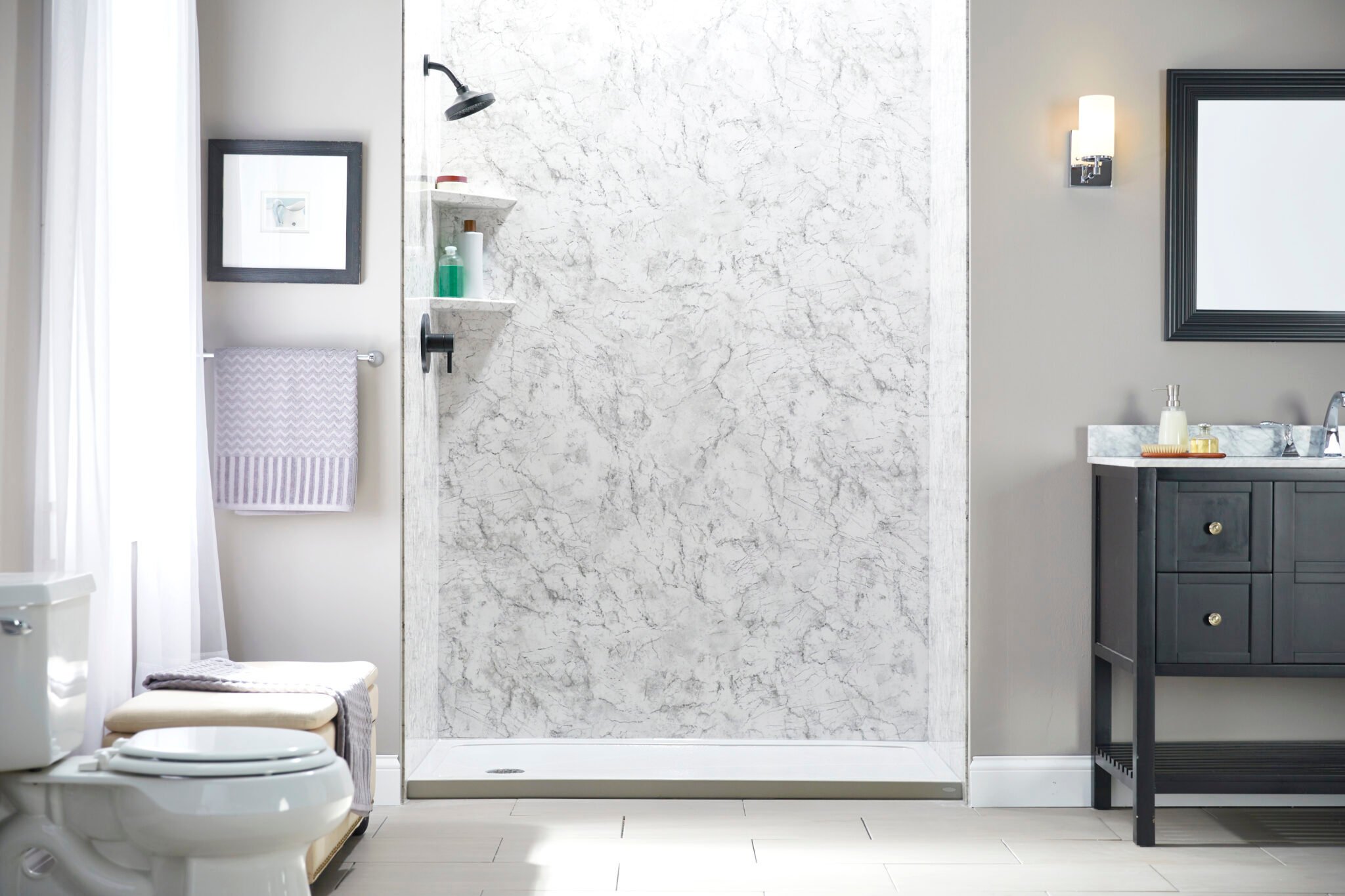
You’re the type of homeowner who wants to really understand the upgrades you’re making to your home. If you’re going to hire a bathroom remodeling company to redo your shower, you don’t just want to know about the shower wall colors and accessory finishes. The problem is, these surface features are what most companies focus on when explaining the parts of a shower.
At ZINTEX Remodeling Group, we’ve been installing tubs and walk-in showers in Dallas and beyond for 25 years, and we’ve found that informed homeowners get the upgrades they really need. Today, we’re going below the surface to teach you about every part of a shower, including:
- Shower water systems: drains, pipes, valves, and water outlets
- Shower structural elements: subflooring, studs, bracing, and backer boards
- Visible features: shower bases, shower wall materials, and shower accessories
What Goes Into a Shower Water System?
First, let’s talk about the most important part of a shower: the elements that make up the water system. In this section, we’ll cover everything from the main types of shower drains to shower valves and water outlets.
Types of Shower Drains
Shower drains are technically a surface feature that connect to the pipe that collects and removes water and other liquids (like the shampoo you rinse from your hair) from your shower floor. They also serve the very important purpose of preventing water overflow.
Most shower drains are point drains, which you’ll find in the center of a walk-in shower floor. They require a barely perceptible slope from every edge of the shower that directs the flow of water to that center point.
On top of the drain, you’ll find a fixture that helps to prevent solids, like shed hair or bar soap, from entering the drain pipe. In a tub-and-shower combo, that drain cover can be sealed to fill your tub for a relaxing soak. In a walk-in shower, these covers usually have a honeycomb or strainer design.
Modern Shower Pipes and Plumbing
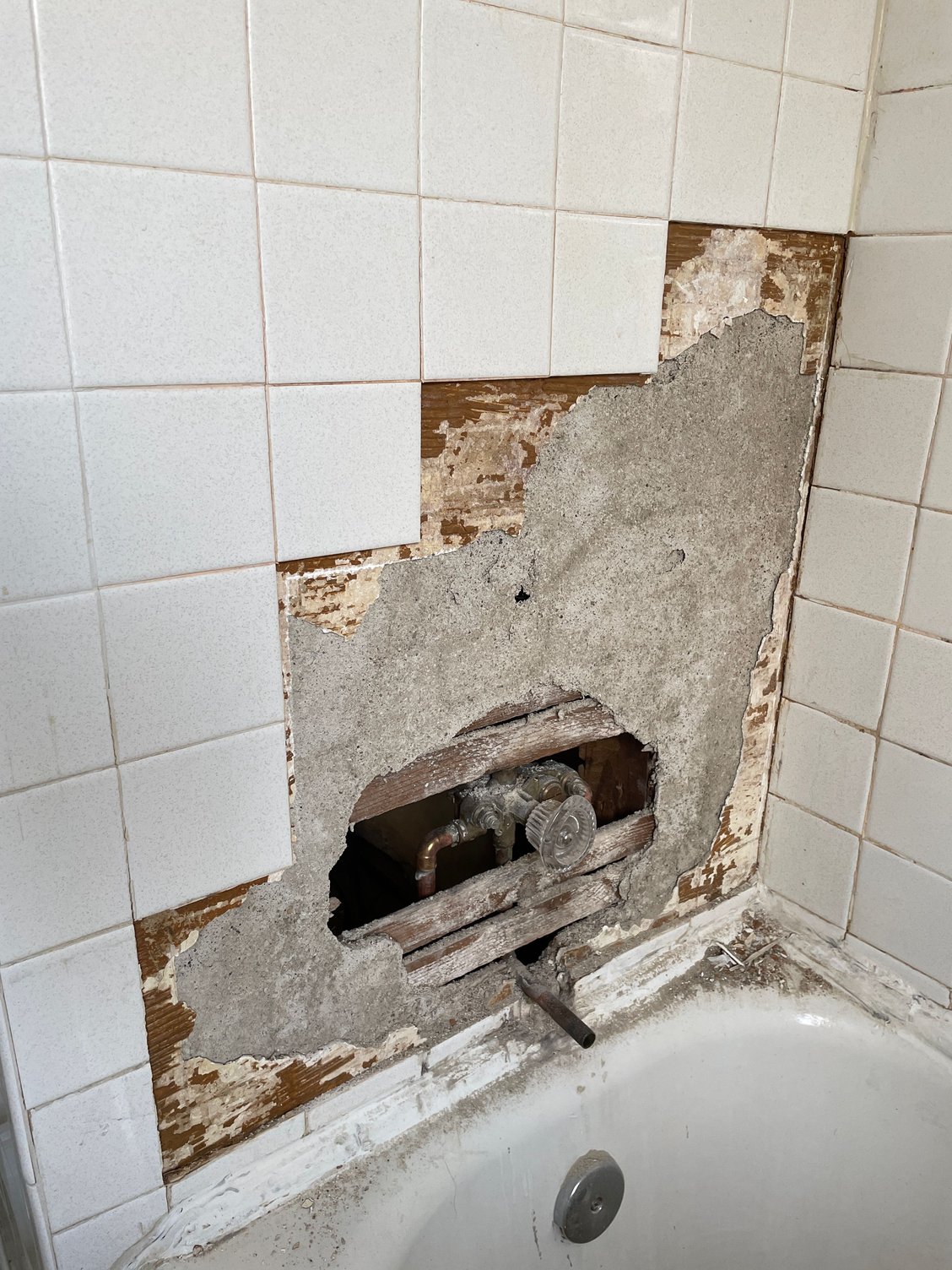
A series of pipes connect your external water supply to various points in your home. If your shower system hasn’t been updated in a few decades, those pipes may be negatively impacting things like temperature control and pressure. Plus, older pipes may sustain wear and tear that will eventually give way to cracks and bursts.
In your shower, your water supply comes through two pipes: one for hot water and one for cold. When upgrading your shower, many bathroom remodelers (including ZINTEX) will replace old copper pipes with a modern PEX system that can last up to 50 years with minimal maintenance needs.
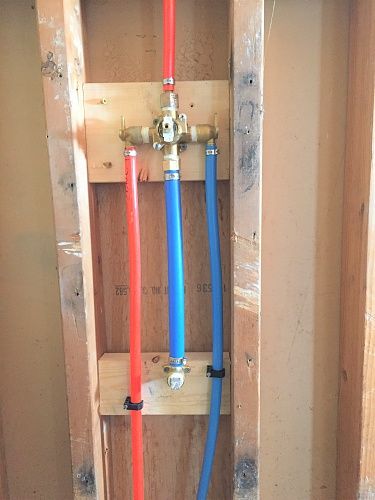
Your installer may also need to replace the p-trap and pipes below your drain. This is usually done if the pipes and p-trap are old or poorly configured for consistent drainage.
The Purpose of Shower Valves
A shower valve is the component that gives you control over the flow of water. The external-facing part of the valve can be turned so that the internal part can turn the shower on and off, as well as to adjust temperature.
Modern shower valves often contain an anti-scald component. This is a useful safety device that regulates the temperature of the water coming from your faucet or showerheads. It prevents the water from suddenly coming out very cold or very hot. (Were you ever told not to flush the toilet while someone in your household was in the shower? The anti-scald component eliminates that problem.)
Types of Water Outlets in Tubs and Showers
We’ve talked about how drains divert waste water away from your shower and pipes like PEX systems direct water to your shower system. Now, let’s talk about the actual water outlets that release water into your shower system.
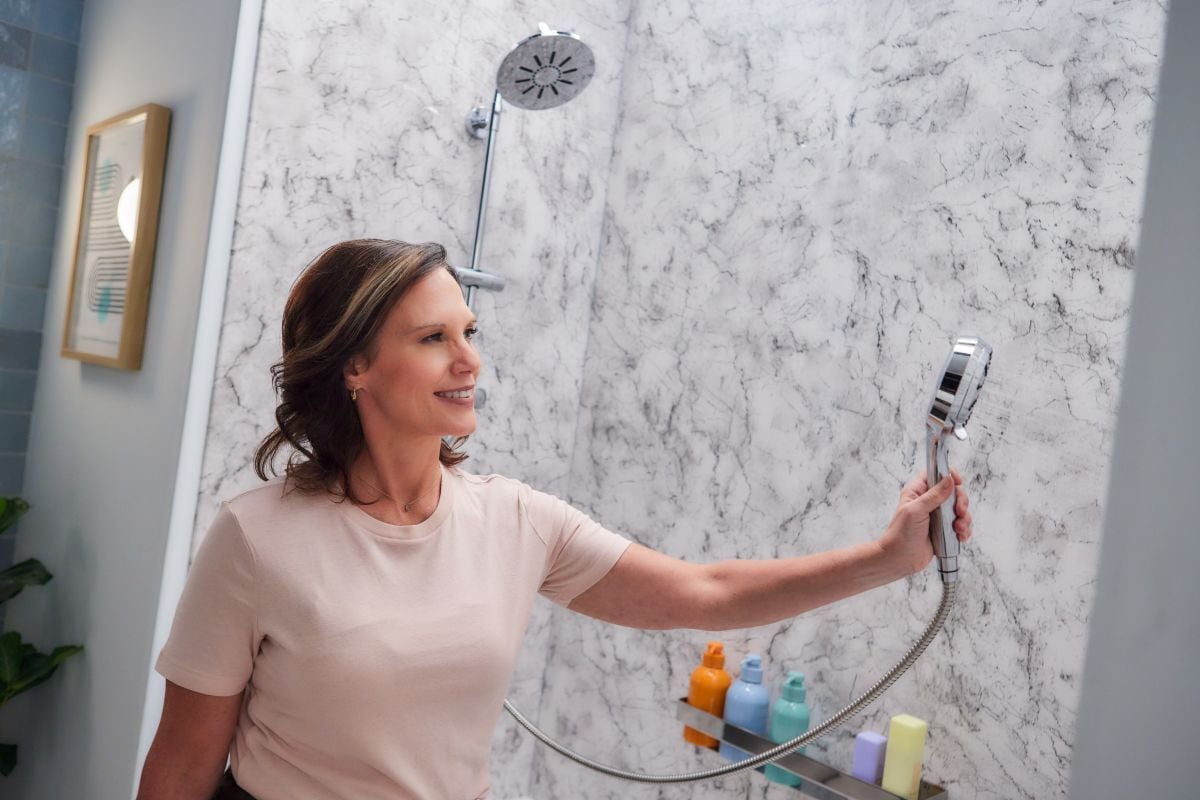
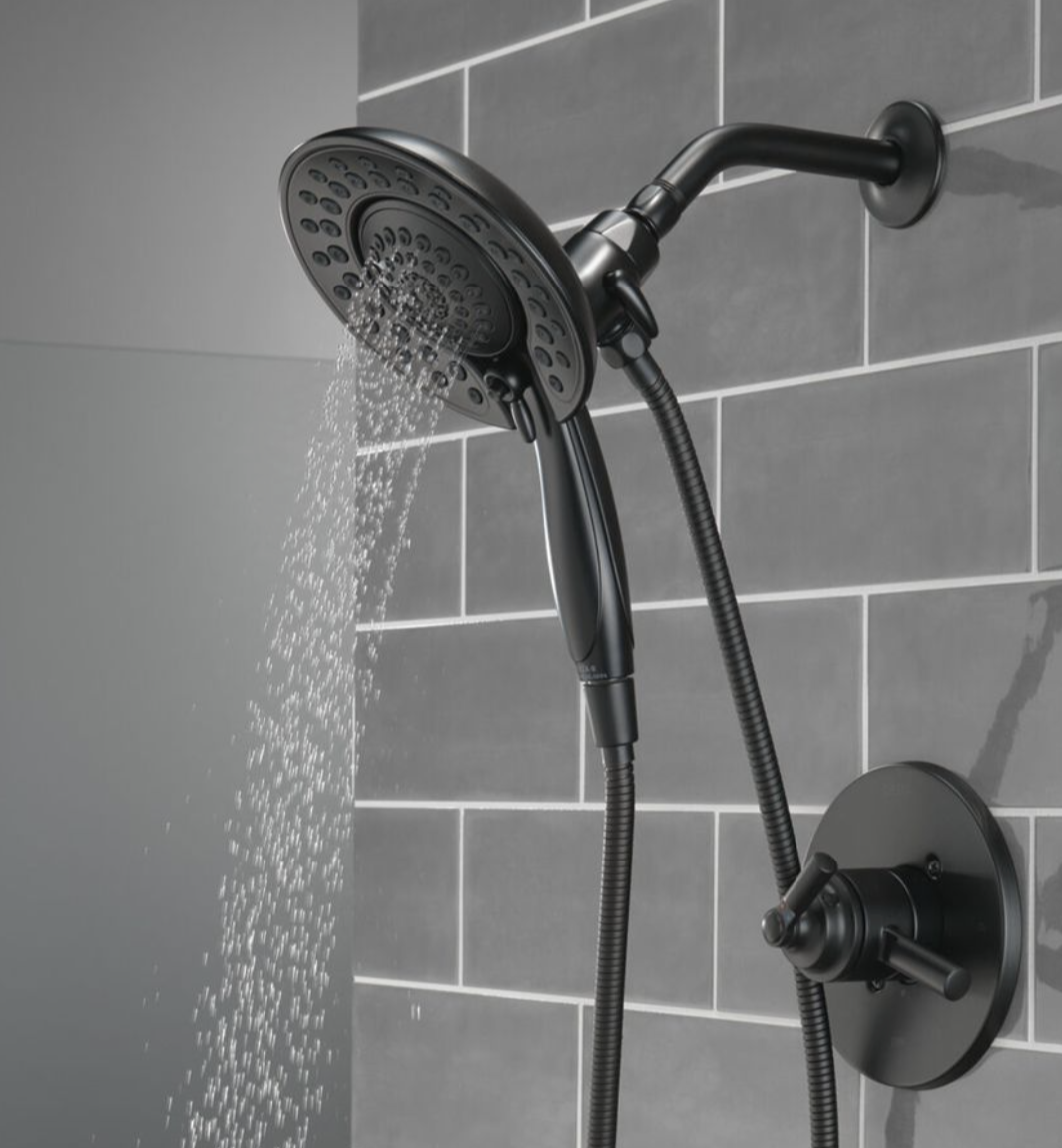
In a walk-in shower, your water outlet is your showerhead. The type of showerhead you use will impact factors like your shower water pressure and showerhead functionality. If you have a separate handheld sprayer, your showerhead will have a diverter that opens and closes the flow of water to that sprayer.
In a tub-and-shower combination, you have two water outlets: the faucet that you use to fill the tub and the showerhead. In this case, you’ll have a diverter in the faucet that can close the faucet and open the showerhead.
What’s Behind Shower Walls?
Imagine you could take an x-ray machine to your shower and see what’s behind the walls. In this section, we’ll talk about your shower subflooring, studs, bracing, and backerboards.
Level Shower Subflooring
Below your shower pan or shower base is your shower subflooring. Your bathroom remodeling company should ideally be able to assess that subfloor and make upgrades as needed, particularly if the subfloor:
- Has sustained water damage and has become weak, moldy, or spongey
- Is no longer level, which will cause water to pool away from the drain (increasing your chances of water damage and mold over time)
Oftentimes, shower subflooring consists of plywood installed on top of joists with a waterproofing liner and/or mud bed to create a long-lasting seal and proper slope. That said, some shower subfloors are made of poured concrete.
The Importance of Shower Studs and Bracing
Shower studs and custom bracing are also crucial behind-the-scenes components of any walk-in shower. Just like shower subflooring, you’ll need to have shower studs replaced if they have:
- Water damage
- Mold
- Cracks or other types of structural damage
Your shower installer may also want to add more studs for better reinforcement, since some old showers were built on very minimal support.
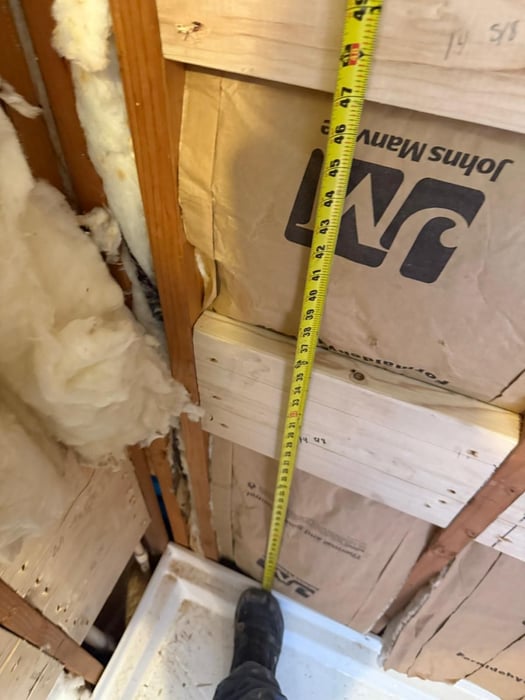
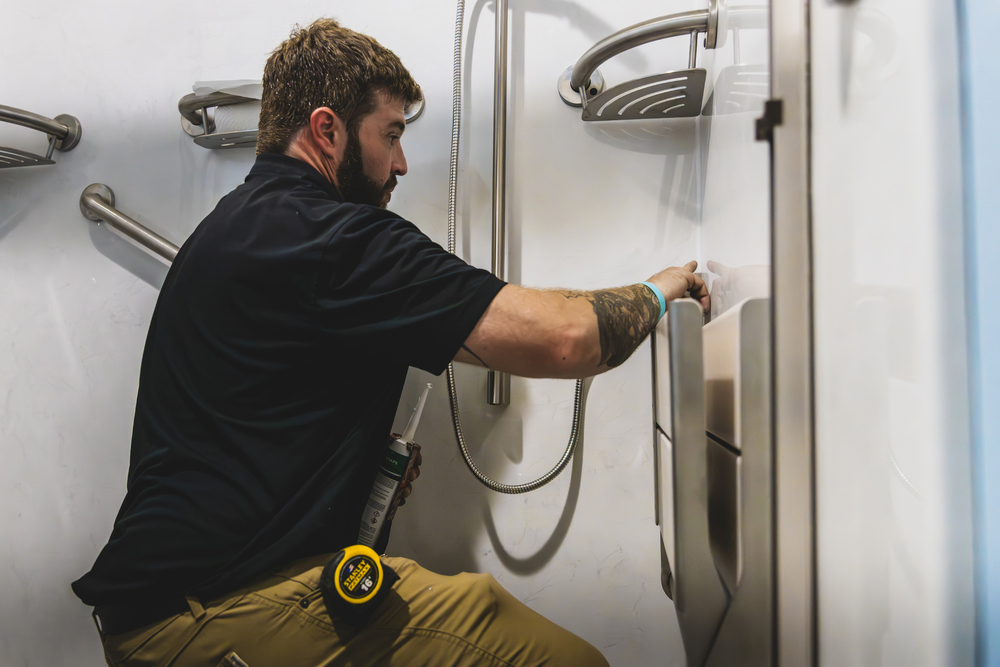
While studs are the vertical boards that create a strong base for your shower walls, braces are smaller horizontal boards that get installed between studs based on where you’re placing weight-bearing accessories. The addition of bracing is one of the many reasons why we recommend full shower replacement services, rather than retroactive grab bar and bench installation.
Waterproof Backer Boards
The last behind-the-scenes element in your shower is the waterproof backer board. While backer boards do come in a few different materials (like cement and mat gypsum), it’s generally designed to:
- Create a rigid surface on which to adhere your shower wall and prevent warping or cracking
- Add strength, stability, and durability to your shower system
- Add a layer of moisture resistance to your waterproofing system
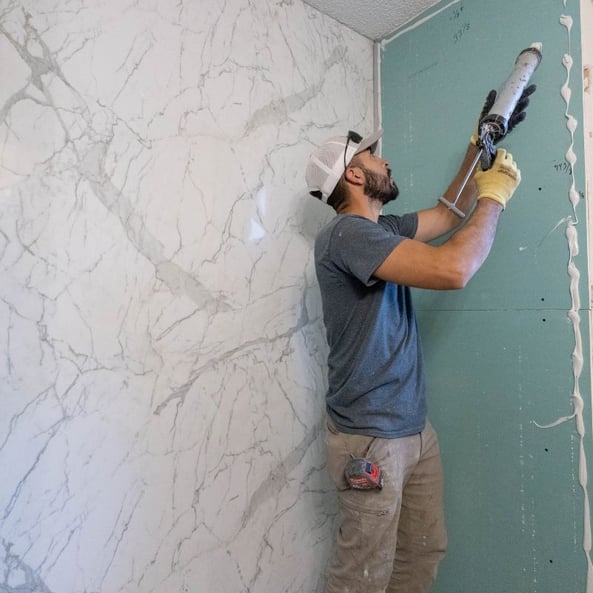
How your backer board is installed is just as important as the material itself when it comes to creating stability and waterproofing your shower area. Your installer should check that each board is level before adding a lasting waterproof seal to each corner seam.
What Are the Visible Parts of a Shower Called?
Last but not least, what are the parts you’ll actually interact with every day? Here’s an overview of the visible components of your shower, from the base to the accessories.
Shower Bases
What is a shower base, and is it the same as a shower pan or a shower tray? These are, in fact, different names for the same feature. A shower base is the piece of your walk-in shower that covers the floor, and it serves a lot of really important functions, including:
- Containing water while you’re showering
- Helping to funnel water towards the drain
- Protecting the subfloor and walls from water damage and moisture
- Providing a non-slip surface for increased showering safety
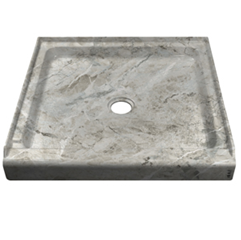
Oftentimes, the material of your shower base will mirror the material of your shower walls. For example, if you’re installing acrylic shower walls, you’ll want to install an acrylic shower base (which does a great job of fulfilling all those roles listed above).
Shower Wall Materials
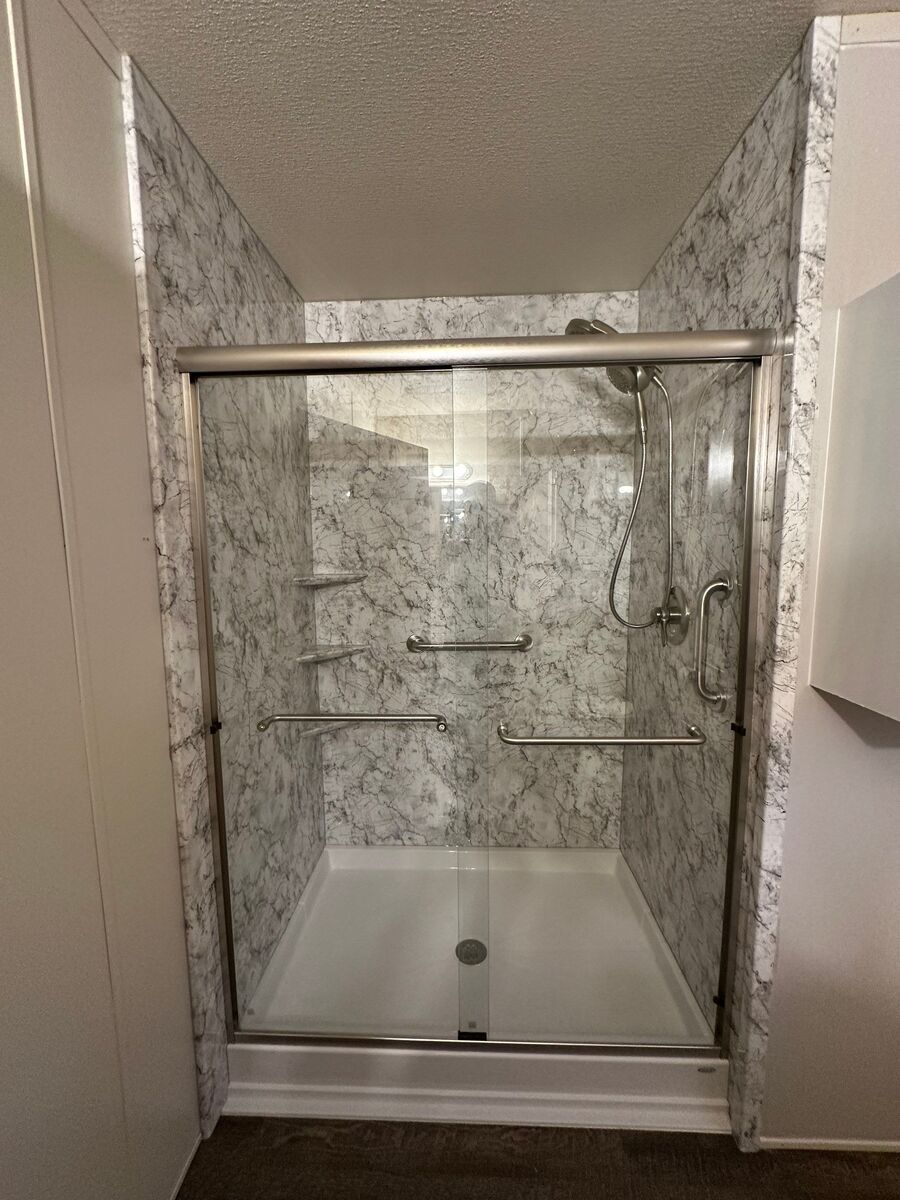
Your shower walls are the biggest visible components of your new shower, typically covering three sides of your shower and creating a waterproof system and aesthetic beauty. At ZINTEX Remodeling, we talk a lot about shower wall materials. We’ve got guides on choosing shower walls based on:
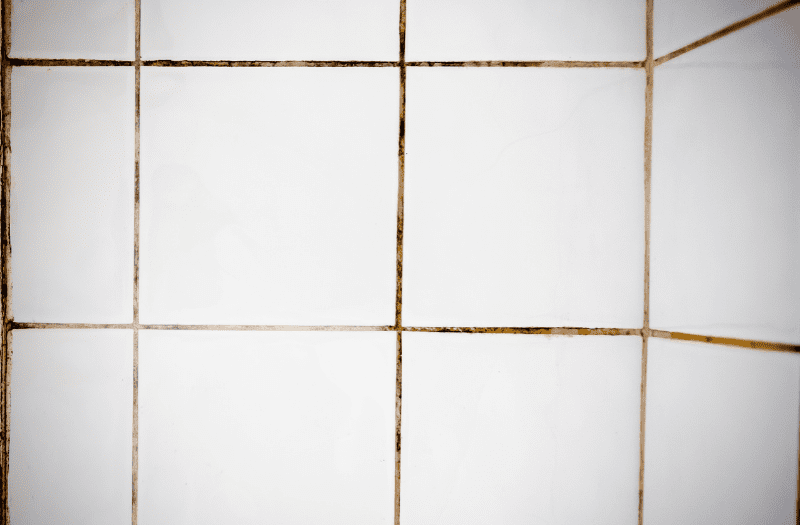
Popular shower wall materials include acrylic (our specialty here at ZINTEX), tile, fiberglass, and natural stone. As you can guess from the guides we’ve linked, your shower wall materials will impact everything from walk-in shower durability to walk-in shower costs.
Shower Enclosures
Some homeowners hear the term “shower enclosure” and assume we’re talking about shower walls because they enclose your shower system. While that logic holds, a shower enclosure is actually the final piece of the water containment puzzle that you’re also going to move, open, or step around to enter or exit your shower.
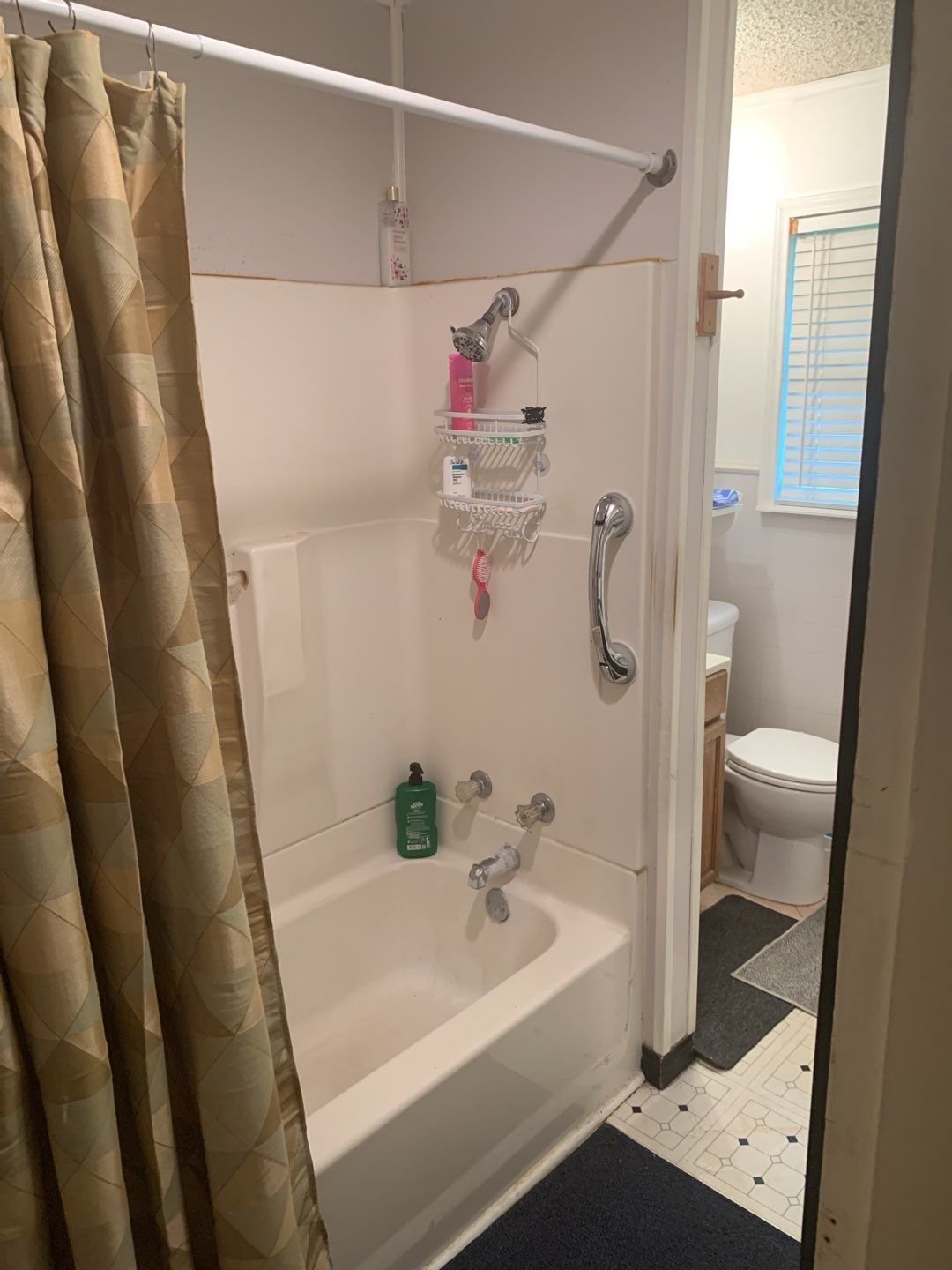
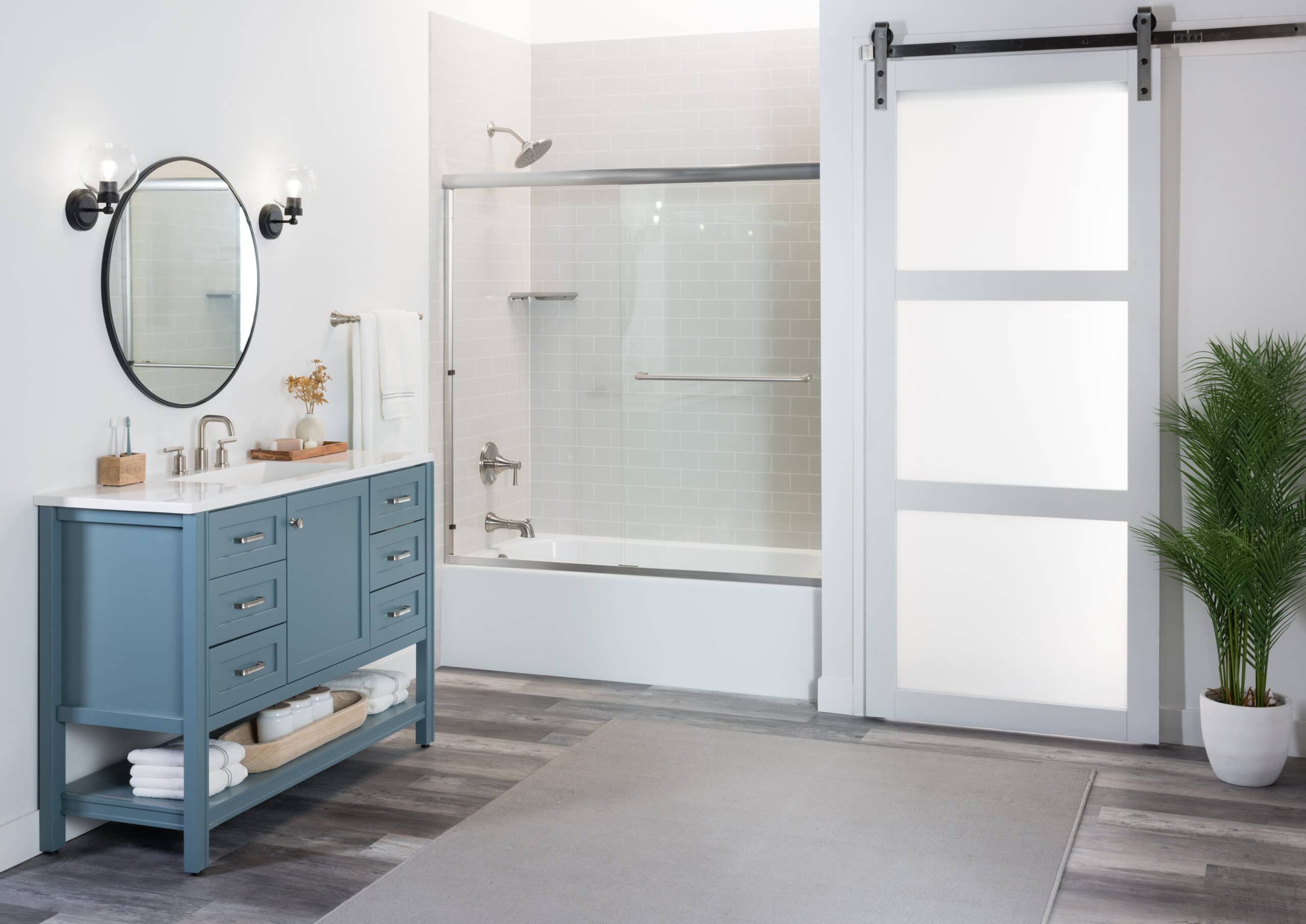
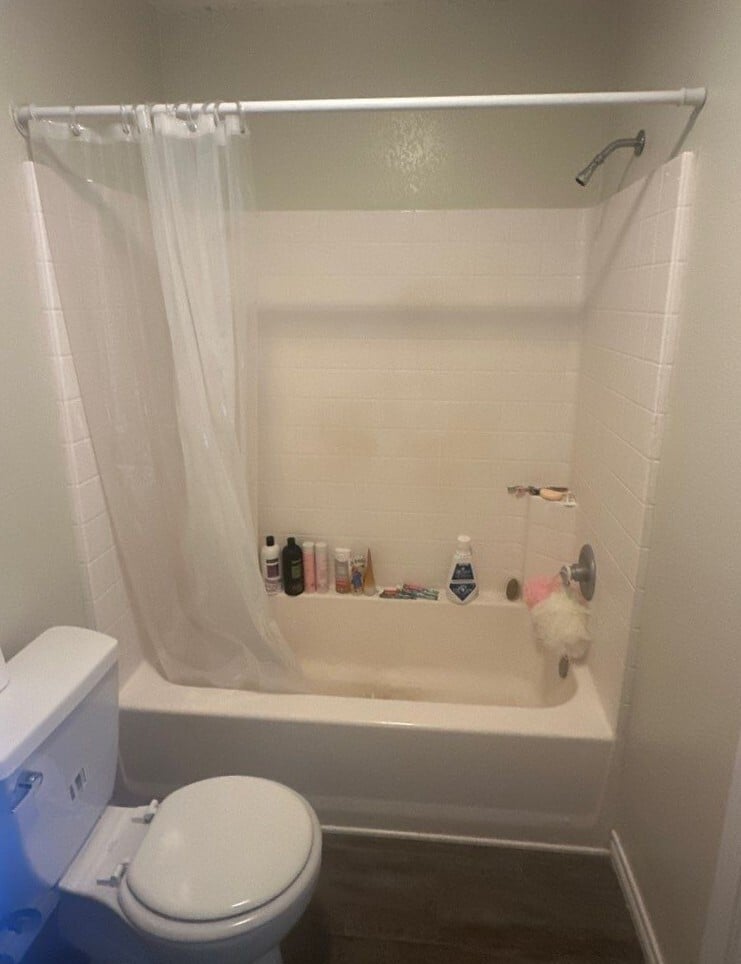
On the cheapest and simplest end, a shower enclosure can be a shower curtain rod and shower curtain. For a higher budget, you can consider options like a hinged or sliding glass shower door. On the highest end, you have options like shower steam doors and fixed glass panels.
The shower enclosure you choose should help you stay within your budget while also meeting your long-term needs. For example, a fixed glass panel is often more disability-friendly for homeowners who use mobility aids because they don’t need to let go of their mobility aid to open a shower enclosure.
Shower Accessories
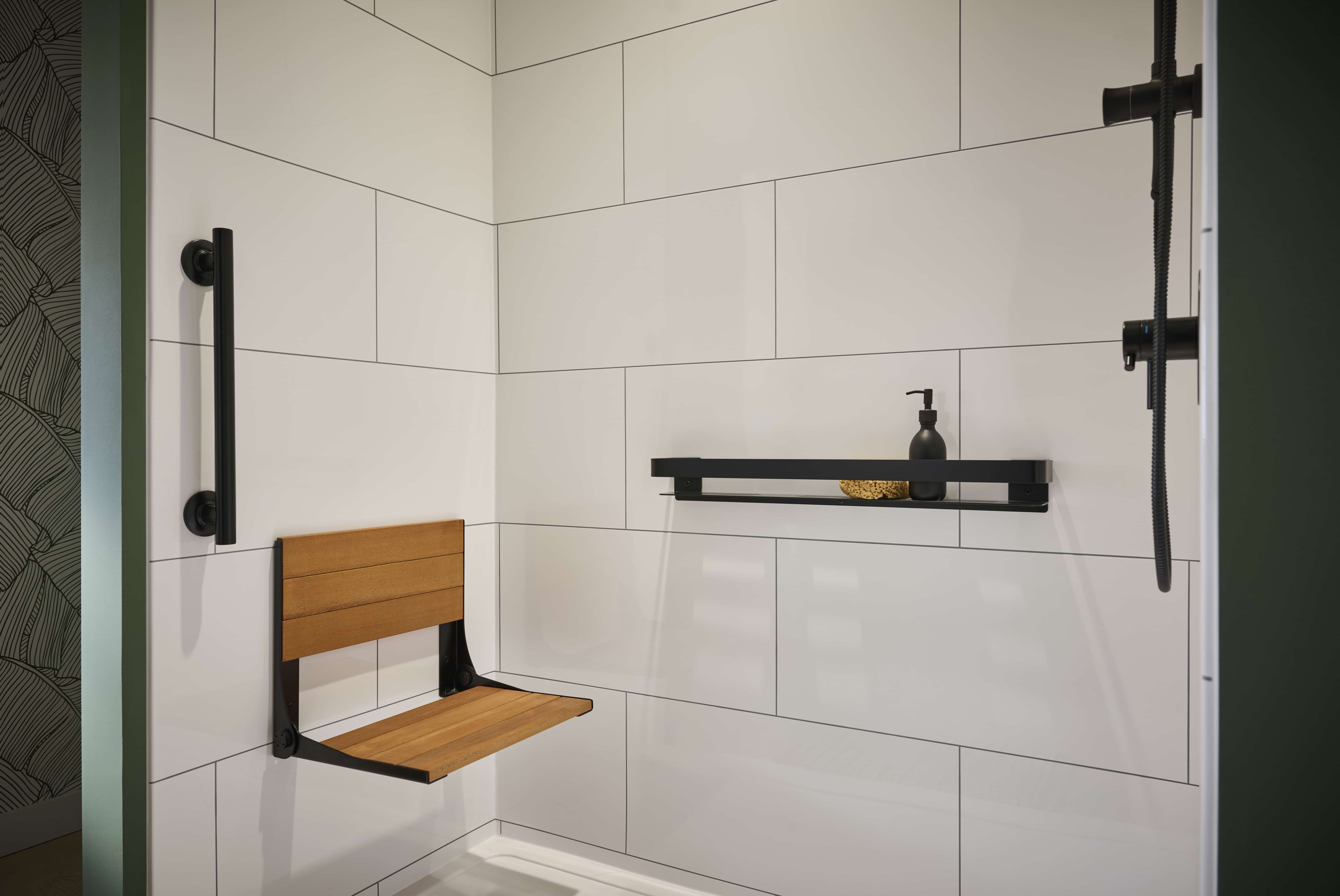
Finally, a custom walk-in shower isn’t complete without at least a few accessories. Shower accessories are designed to increase the functionality of your shower so that it works for you and your family for years to come. Popular accessories include:
- Storage features like recessed soap niches, corner caddies, and built-in shelves for toiletries
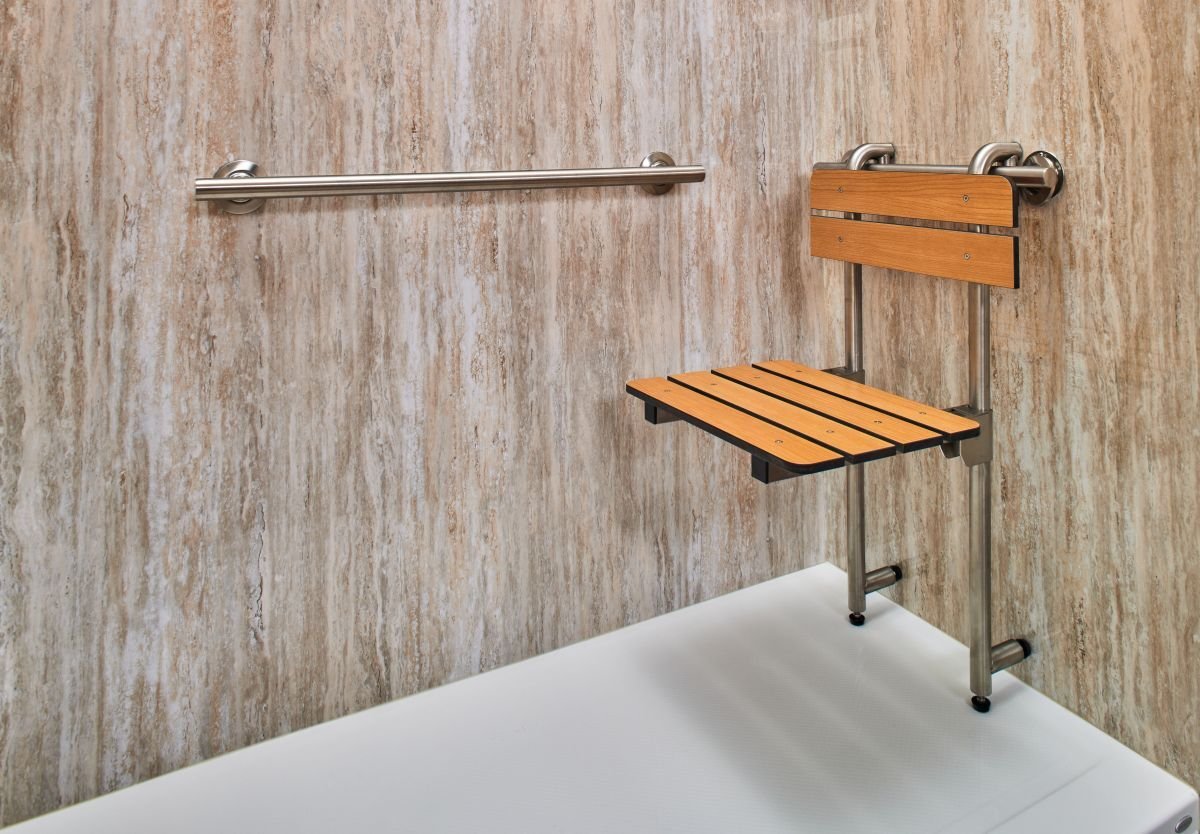
- Grab bars installed at the height and angle that is most useful for you
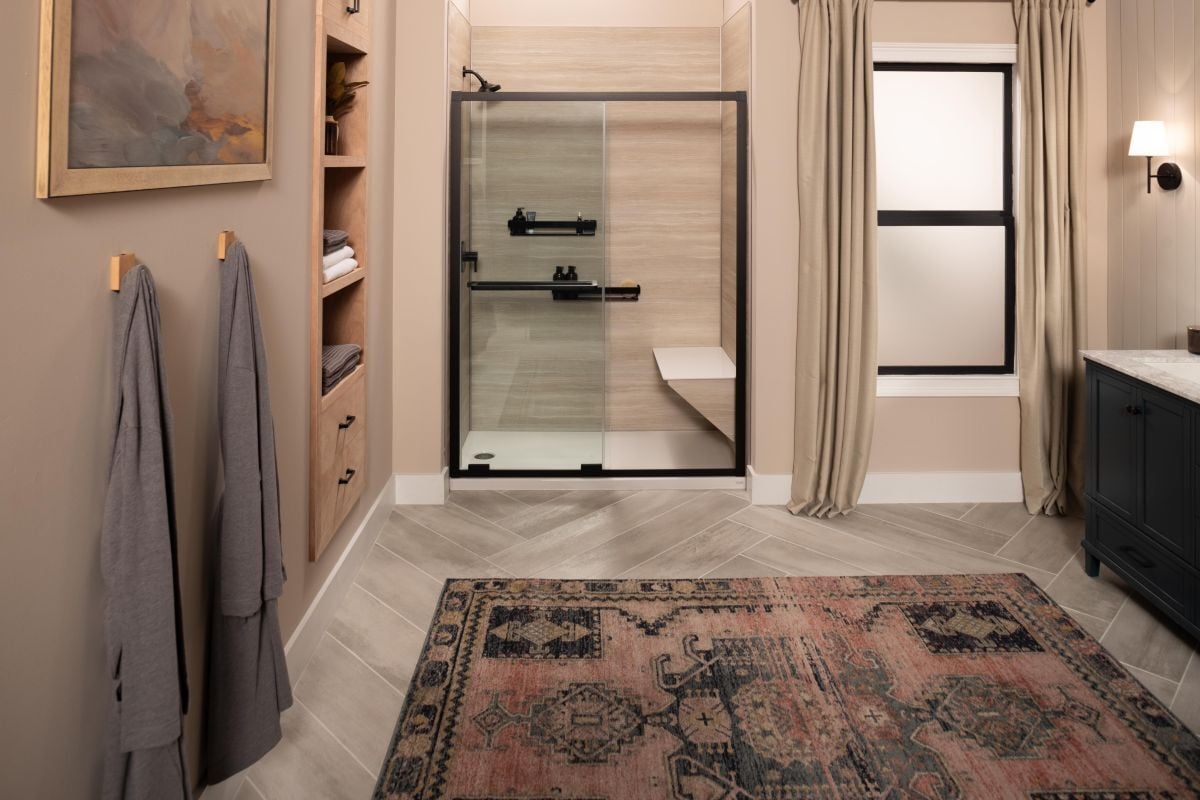
- Built-in seating options like benches or foldable seats
No matter what bathroom remodeling company you hire or shower wall materials you use, shower accessories will impact your final walk-in shower price. Use our instant bathroom remodel estimator tool to see how different accessories fit your budget.
How Long Does a Walk In Shower Install Take?
Understanding the parts of a shower may seem like overkill to some, but we find that ZINTEX customers like to know what their installation team is doing and why. Now that you’ve read this guide, you not only know what goes into a walk-in shower but also how complex that remodel process really is.
At ZINTEX Remodeling Group, we strive to provide a great experience for our customers, from that first consultation to the final walk-through of your new bathroom. Next, find out how long it takes to install a new shower.
Topics:


.jpg?width=5400&height=3038&name=JBR_Windstorm_Marble_Smooth_Multi-Function_Shower_Spa_System_Chrome_Lifestyle_Base_Alabaster_White_Grab_Bar_Chrome_Prairie_Corner_Shelf_Windstorm_Marble_Bench_Seat_Windstorm_Marble_Alabaster_White%20(1).jpg)

.jpg?width=2100&height=1400&name=JBR_Wall_CrystalFrost_DualBypassDoors_Tal_Lifestyle_01-2100x1400-c185e8dd-df15-4cf3-9c52-ab2371ab98b1%20(1).jpg)
.jpg?width=1600&height=900&name=JBR_DealerKit_Hero_CrystalFrost_1600x900%20(1).jpg)