Replacing your windows in Dallas can boost your curb appeal, property value, energy efficiency, and more. That said, it is one of the more expensive remodels you can invest in, and you want to ensure that you’re getting the most bang for your buck. Are some companies encouraging upgrades just to drive up costs? How can you be sure that you’re only paying for things that will make a tangible difference?
At ZINTEX Remodeling Group, we have seasoned window professionals pioneering our window replacement services in Dallas and Fort Worth. As we build our reputation and earn the trust of DFW homeowners, we lead with transparency, honesty, and a spirit of education. Today, we’re sharing our complete guide to window U-factor, a window upgrade that can yield great benefits–but only up to a certain point. Read on to learn:
- What U-factor is
- U-factor ranges
- What actually lowers U-factor
- How U-factor impacts new window costs
- The best U-factor for Texas conditions
What Is U-Factor? What Does it Measure?
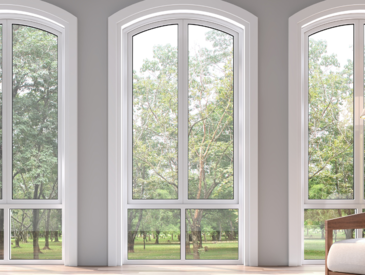
Simply put, U-factor measures how much heat can pass through all the components of a window unit. That would include things like the frame, the panes, and the spacer used to create the window.
How is U-factor measured? To get more technical, U-factor is a measurement of how much heat escapes through a window per square meter in watts and Kelvin.
Confused? Don’t worry. You don’t need to make any calculations to get the best U-factor for your windows. All you need to know is the best range for your goals and climate.
What Do Different U-factor Ranges Mean?
U-factor ranges fall between 0.55 on the high end and 0.20 and lower on the low end. The lower the value, the better the energy efficiency. Here’s a closer look at the typical U-factor ranges you’ll see when shopping for window replacements and what they mean:
|
U-factor Range |
Performance Category |
Average Use Case |
|
0.45-0.55 (Found in old or builder-grade windows) |
Poor Energy Efficiency |
Single-pane windows |
|
0.30-0.39 |
Moderate Energy Efficiency |
Basic double-pane windows |
|
0.25-0.29 (Most popular choice) |
Good Energy Efficiency |
Upgraded double-pane windows |
|
0.20-0.24 |
High Energy Efficiency |
Premium double-pane or triple-pane windows |
|
< 0.20 (Found in very cold climates) |
Ultra-Higha High Energy Efficiency |
Upgraded triple-pane |
How can you find out what range a specific window product falls under? You’ll want to look at the NFRC rating, which provides information about the energy efficiency and performance of a window unit.
What Lowers a Window’s U-factor?
As we mentioned already, a lower U-factor indicates higher energy efficiency, because a lower U-factor correlates to less heat escaping through the window unit. What factors in your window materials and design create a lower U-factor? Let’s take a look.
The Number of Windowpanes Per Frame
When you’re choosing your new Dallas windows, one of the things you’ll need to decide is whether or not you want single panes, double panes, or triple panes. The number of panes will impact things like noise transfer, but they have the biggest impact on energy efficiency:
- Single-pane windows have a high U-factor and are rarely used in modern homes
- Double-pane windows provide a huge improvement, especially when combined with a quality frame; they tend to cost between 10-25% more than a single-pane window
- Triple-pane windows offer the lowest U-factor, but this level of insulation is more than the typical Dallas homeowner needs; they tend to cost between 25-40% more than a double-pane window
Low-E Coatings
Low-e (low-emissivity) coatings are thin, metallic layers that are applied to window panes to block the passage of radiant heat. These layers are invisible, so they won’t impact things like natural light or visibility.
In a warm-weather climate like Dallas, you’re going to want solar-control low-e coatings to keep heat out. Low-e coatings are particularly effective on windows that get a lot of sun exposure, like south-facing windows.
Windowpane Gas Fills
Double-pane and triple-pane windows don’t just have lower U-factor because extra layers of glass create extra barriers against the Dallas heat. Between those panes is what we call a gas fill, and that gas is usually argon or krypton.
Gas fills increase the thermal insulation of your window unit by keeping hot air out in the summer and trapping warm air inside in the winter. Modern window units trap those gas fills in with a leakage rate of about 0.5% per year, which means that you’re still benefitting from that thermal insulation at a rate about 90% as much as 20 years later.
Window Frame Materials
The frame material you choose has one of the biggest impacts on your window unit’s overall efficiency. Part of this has to do with the seal different frames can create to reduce air leakage and drafts, but different frame materials also play a role in U-factor as well.
|
Frame Material |
U-factor Contribution |
Price Point |
|
Aluminum |
Poor |
Cheapest option |
|
Vinyl |
Very Good |
Moderate option |
|
Fiberglass |
Great |
Moderately expensive option |
|
Composite |
Excellent |
Most expensive option |
At ZINTEX Remodeling Group, we prefer vinyl frames despite the fact that options like fiberglass and composite technically provide a lower U-factor. This is because vinyl has great performance for its price point and because while something like composite has a lower U-factor, vinyl actually has a stronger, more waterproof, and more weather-tight seal.
Does U-factor Impact Window Replacement Costs?
U-factor does impact the cost of your window replacement. As you’ve probably noticed already, you’re getting a lower U-factor each time you upgrade to better-quality materials.
While your window replacement company probably isn’t going to equate low U-factor itself to a higher cost, they are going to charge more for the materials you need to get it.

For example, we already mentioned that a double-pane window tends to cost 10-25% more than a single-pane window. Something like a low-e coating may also add up to 10% to your total estimate, while a premium krypton gas fill might add 15% or more than a standard argon gas fill.
The trade-off is that while you’re paying more for a low U-factor window unit, you’re also looking at a better ROI. For example, energy-efficient windows have been shown to reduce household energy costs by 7-15%. That’s a savings that you’ll get to enjoy as a homeowner and that will likely increase your property value when it comes time to sell.
What U-factor Is Best for Dallas-Area Homes?
Here’s the most important question of all: what U-factor should you aim for when replacing Dallas windows?
Ultimately, we recommend that Dallas homeowners aim for that “good energy efficiency” range of 0.25-0.29 while focusing just as much on choices that will reduce problems like air leaks.
Why not aim for an even lower U-factor? There reaches a point where exceptionally low U-factor is more of a marketing grab than a practical necessity.
According to our Windows Program Director Alex Grossman, “Most window problems in Texas aren’t about efficiency ratings. They’re about air leaks, weak balances, and poor build quality. In this climate, performance comes from what’s behind the NFRC ratings: strong seals, solid hardware, and a tight install.”
Install Energy-Efficient Windows in Dallas with ZINTEX
If you're researching new windows in Dallas, you're going to come across the concept of U-factor. With this guide, you now know what that means, what level of U-factor you should aim for in Dallas, and how important U-factor really is. What's next?
ZINTEX Remodeling Group is proud to launch our window replacement services in the same wonderful city that started it all for us: Dallas, Texas. Our goal is to provide homeowners with the best window products and installation techniques to combat Texas heat and keep your home comfortable all year round. Find out why vinyl window frames are our specialty.
Topics:


.png?width=1920&height=1080&name=Window%20Installer%20(1920%20x%201080%20px).png)
.jpg?width=1536&height=1024&name=ChatGPT%20Image%20Feb%203%2c%202026%2c%2007_34_05%20AM%20(1).jpg)