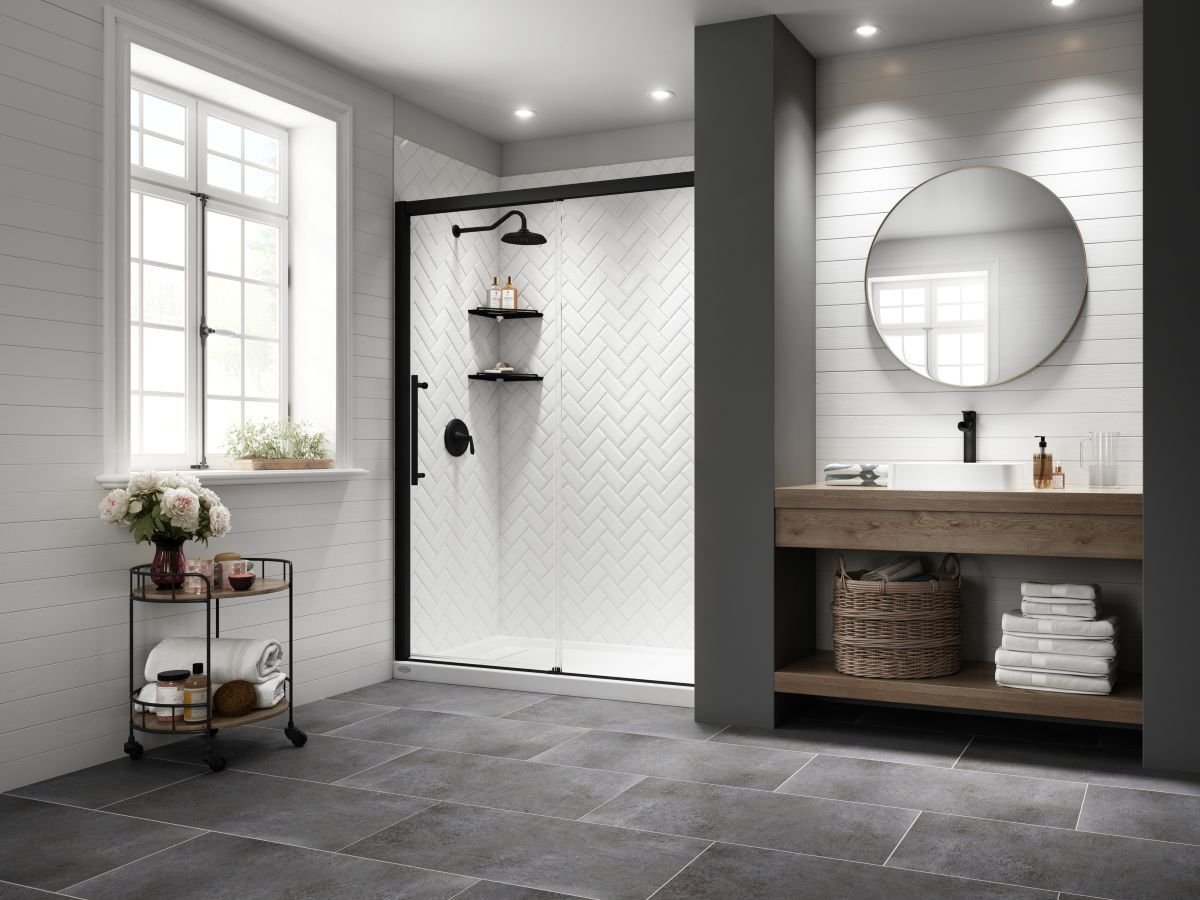
Many of Jacuzzi’s simulated tile patterns are printed directly onto the acrylic shower wall. Others, like the carved stone pattern, are engineered to create texture without any indented grout lines. Many homeowners opt for the simulated tile patterns because they’re smooth and easy to clean. More importantly, they’re available with all shower wall colors in the Signature Collection.
This simulated tile pattern creates a uniform grid with rectangles that are 8 inches wide and 10 inches tall. The individual rectangles are completely smooth to the touch, making this pattern exceptionally easy to clean.
Herringbone is a classic pattern that dates back thousands of years. The simulated herringbone tile is, unsurprisingly, one of the most popular patterns with ZINTEX customers. Like the 8” x 10” design, the pattern creates a shallow texture that is visually impactful but still very easy to clean.

Photo of a ZINTEX walk-in shower with simulated herringbone tile wall surrounds by Jacuzzi
Subway tile gets its name from its original use in the New York subway system. This association makes the subway tile design simultaneously classic and modern. This particular configuration consists of layered rectangle shapes that are three inches tall and six inches wide.
Jacuzzi offers two different takes on the subway tile pattern in simulated tile. This time, the “tiles” are longer and more dramatic, at six inches tall and twenty-four inches wide.
So far, the simulated tile patterns we’ve shared with you have all had a smooth finish, creating a look and feel that is comparable to ceramic or porcelain. Alternatively, the random stone simulated tile pattern is textured throughout, creating the look and feel of organic natural stone tiles. This style also stands out thanks to the irregular shapes and dimensions of the simulated tiles, which range from small rectangles to large squares.
 Close-up photo of simulated random stone tile in a Jacuzzi shower by ZINTEX Remodeling
The Jacuzzi carved stone pattern is by far the most unique in their line of simulated tile. In fact, it deserves its own category altogether. Rather than having any sort of simulated grid pattern, the carved stone finish creates a rippled effect in organic horizontal waves and grooves across the acrylic wall.
Jacuzzi’s textured grout patterns are designed to replicate the three-dimensional look and feel of a tile and grout shower. With recessed grout lines dividing up the acrylic surface, they provide an even more realistic imitation of tile than the simulated tile patterns. Currently, they are only available on Alabaster White Jacuzzi walls.
If you like the look of the simulated 3” x 6” subway pattern but want to take it a step further in the direction of true tile, Jacuzzi offers that same design in their textured grout patterns.
This textured grout pattern offers a touch of elegance to your acrylic shower design. The spade pattern is unlike any of the other Jacuzzi shower wall patterns, bringing a timeless vintage aesthetic to your sleek, modern bathroom.

Close-up of Jacuzzi shower wall panels with the spade pattern installed by ZINTEX Remodeling Group
The large vertical and large horizontal textured grout patterns create a uniform pattern to break up the Alabaster White acrylic shower wall. These tile shapes are larger than any of the subway patterns, making them more minimalist in look without feeling plain or overly simple.
Jacuzzi’s random tile design is comparable to the random stone design in the simulated tile pattern collection. The primary differences are the grout-like texture between the tile shapes and the smoothness of the tile shapes themselves. This is a great choice if you like the layout of the random stone design but prefer the aesthetic of a ceramic or porcelain tile over natural stone.
Jacuzzi’s shower wall designs are perfect for customizing your shower design and marrying your dream style with the convenience and durability of acrylic. This guide covers all of the Signature Collection simulated tile and textured grout patterns, so you can start to envision your shower remodel.
Looking for more shower design guides? Start with our guide to the different types of shower enclosures.
 Article
What Does ZINTEX Remodeling's Warranty Cover?
Ready for a bathroom remodel but worried about long-term protection? Find out more about our warranty coverage at ZINTEX Remodeling Group.
 Article
Five Common Problems with Acrylic Shower Walls (and How to Avoid Them)
Acrylic shower walls aren’t immune to a few basic problems. Find out what they are and how to avoid them.
 Article
How Much Does a Walk-In Shower Cost at ZINTEX?
What does a walk-in shower cost at ZINTEX? Get a full breakdown of prices from $11K to $22K and discover what will influence the cost of your remodel.