Fiberglass tubs have become a popular choice in new-build properties and quick flips because they’re low-cost and easy to install. Does that mean that you should replace your current bathtub with another fiberglass tub? Not necessarily.
At ZINTEX Remodeling Group, we’ve built a reputation as one of the most trusted bathroom remodeling companies in the south and midwest thanks to our quality acrylic tub and shower systems. Today, we’re going to talk about why we prefer acrylic to fiberglass, but also why some homeowners might still choose fiberglass. Read on to learn more about these popular tub materials.
Our goal is to understand your vision and develop a plan to make your project a reality.
After you complete our form, one of our Call Center Representatives will reach out within 24 hours to schedule a day and time for your consultation with our experienced Design Consultants.
First, let’s talk about why fiberglass tends to be one of the cheapest tub materials on the market. It starts with how fiberglass tubs are actually made.
Fiberglass tubs consist of layers of glass fibers that are spray-coated with resin. From there, fiberglass tubs receive a gel finish, which is typically what you’re restoring if you refinish or resurface a fiberglass tub.
While acrylic tubs often start with a layer of fiberglass, they mostly consist of several layers of heated high-tech polymer sheets. They remain smooth and non-porous without any gel or resin coat, which makes them far more scratch-resistent and durable than fiberglass tubs.
By this point, you can probably guess the answer to which lasts longer, an acrylic tub or a fiberglass tub. If you’re thinking it’s acrylic with the longer lifespan, you are correct.
Fiberglass tubs can last up to 15 years as long as you refinish or resurface them as-needed, which for most homeowners tends to be about every 2-3 years. At around the 15-year mark, you’ll probably notice significant wear and tear like scratching or discoloration, as well as a sponginess in the tub floor.
Acrylic tubs will last 15 to 20 years even without professional maintenance (barring unusual issues related to improper installation). As we mentioned already, they’ll retain that non-porous, waterproof surface without refinishing. Plus, because they’re heavy duty compared to fiberglass, you’re not likely to experience that tub floor sponginess with acrylic.
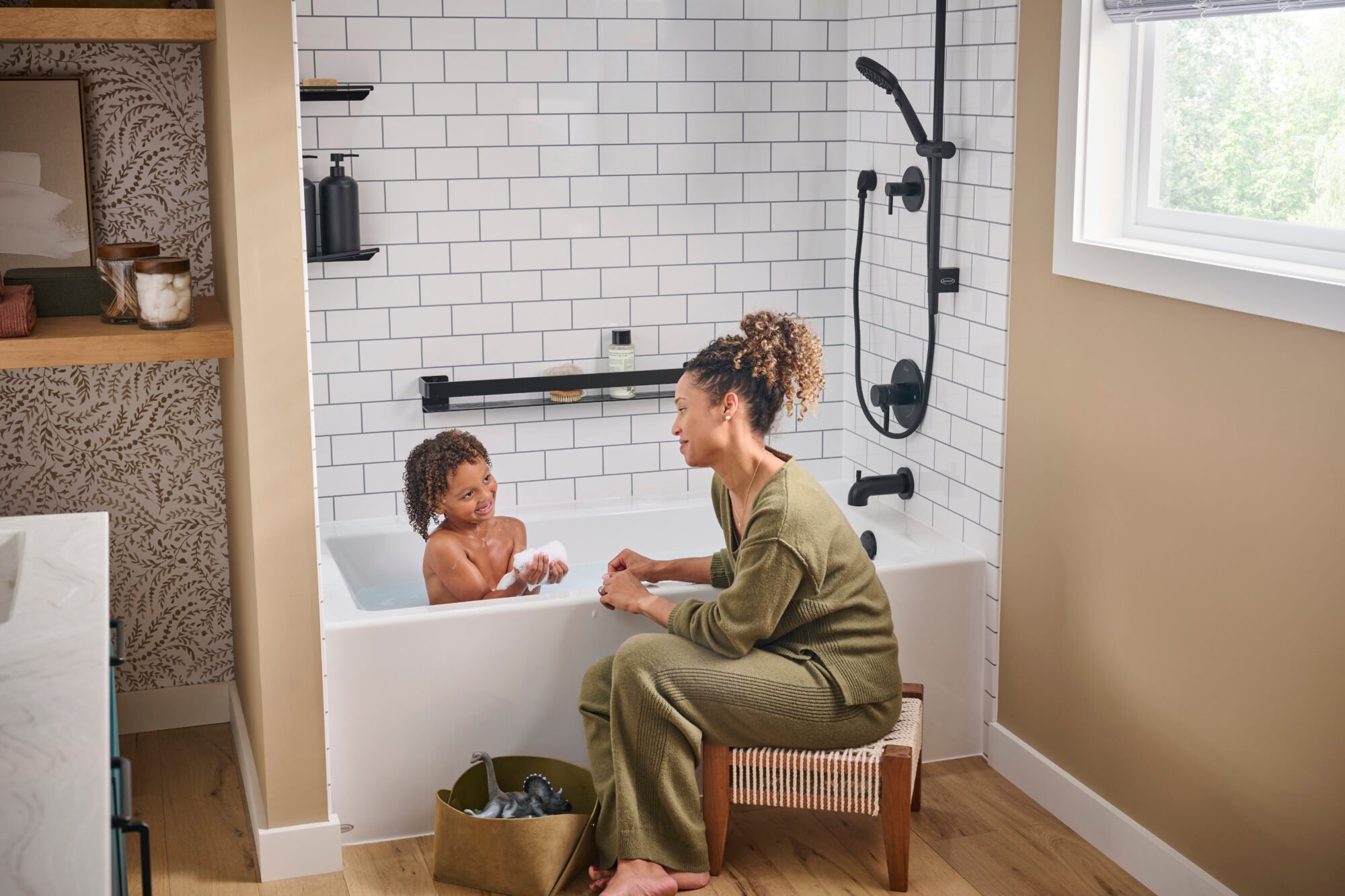
Whether your kids use your bathtub for regular bathing or you use your bathtub for relaxation and hydrotherapy, one thing is certain: you need real temperature control. In this case, we’re not talking about hot and cold taps to control the temperature of the water coming out of your faucet. We’re talking about how well your tub retains heat while in use.
Fiberglass is thin and porous, which means that it tends to pull warmth from your bathwater and then cool down quickly. This has the effect of cooling down your entire bath, often within a span of 20 minutes or less.
Acrylic functions as an insulator. It’s nonporous, which means it’s not drawing any of that moisture or heat into the tub walls. Acrylic tubs can retain heat for up to 30 minutes before you might start to notice a slow, subtle decline in degrees.
This is one category where fiberglass wins, at least a first glance. You can typically replace one fiberglass tub with another fiberglass tub for as little as $4,000, while high-quality acrylic tub replacements start at around $11,000.
While acrylic tubs undoubtedly cost more upfront, you’re going to get more mileage out of your acrylic tub, more customization and design options, and encounter fewer unexpected or ongoing costs. If you go with fiberglass, what starts as a cheap $4,000 tub replacement can end up costing upwards of $6,650 (and as much as $16,900) in the long run.
Cost Source
Upfront tub replacement
$4,000-$8,000
$11,000-$24,000
Additional structural or plumbing repairs
$1,000-$5,000
Included in upfront costs
Regular refinishing or resurfacing
$300-$1000 every 2-3 years
Not needed
Additional maintenance and repairs
$150-$900 for cracks and holes
Most common types of damage covered in warranty
Upfront tub replacement
$4,000-$8,000
Additional structural or plumbing repairs
$1,000-$5,000
Regular refinishing or resurfacing
$300-$1000 every 2-3 years
Additional maintenance and repairs
$150-$900 for cracks and holes
Upfront tub replacement
$11,000-$24,000
Additional structural or plumbing repairs
Included in upfront costs
Regular refinishing or resurfacing
Not needed
Additional maintenance and repairs
Most common types of damage covered in warranty
If you’re designing a tub or tub-shower combo for a home you’re going to live in for years to come, you’re not just thinking about immediate concerns. You’re also thinking about your long-term experience, and that includes the cleaning process.
Acrylic and fiberglass tubs are both considered relatively easy to clean, but acrylic does have fiberglass beat in this category. While both have a smooth surface that can be wiped down with a mild cleanser and soft sponge or cloth, the non-porous nature of acrylic is much better at preventing stains.
That means that not only is it easy to clean your acrylic shower, but it’s easy to keep it looking like new. Fiberglass, on the other hand, can reach the point of staining and discoloration that it never looks truly clean.
Fiberglass has become a mainstay in contemporary bathroom design for a reason. It’s cheap, it’s easy to install, and it’s a common go-to for quick builds and flips. If you’re looking for something that will last longer and look nicer, acrylic might just be the better choice.
What’s next? Take a look at our guide to the types of acrylic bathtubs you can choose from when you get a bathtub replacement from companies like ZINTEX Remodeling Group.
Let's make your dream bathroom a reality! Contact us today to schedule your no-obligation FREE in-home consultation.
A successful remodel calls for information and support every step of the way. Our Learning Center provides a wealth of guides, answers to frequently asked questions, and inspiration for bathroom design.